
Find License Plate Owner
ReverseLookupAuto & Vehicles
4.081.00 Reviews
- Version
- 1.0.5
- Installs
- 10.00K
- Age Rating
- Everyone
Screenshots
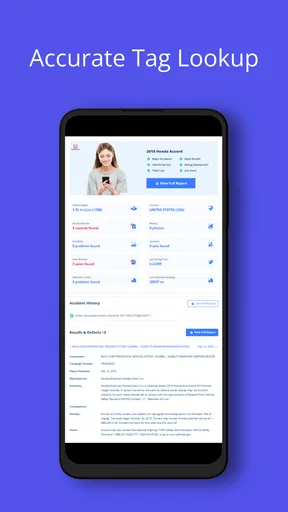
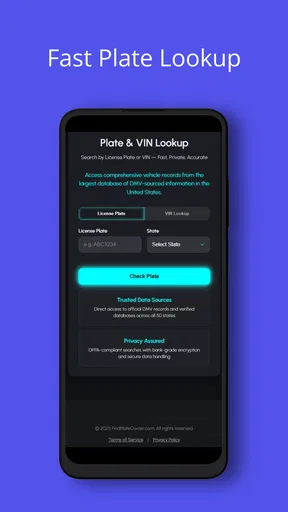
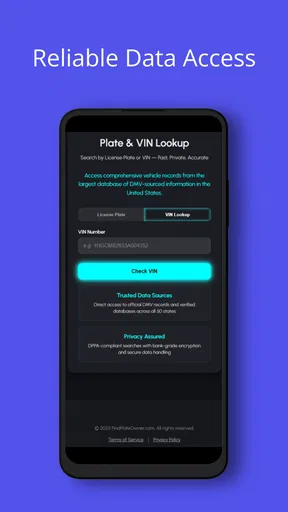
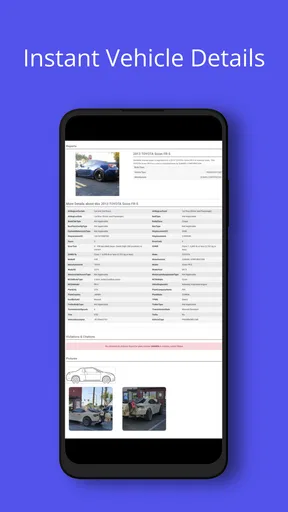
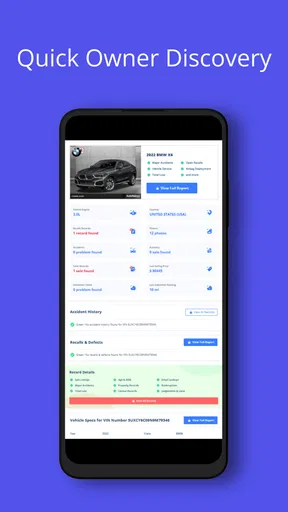
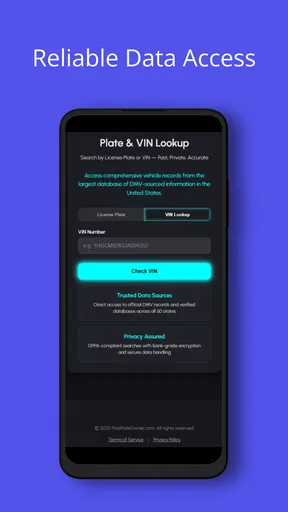
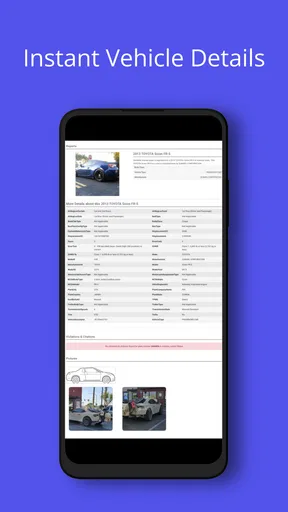
Our Review of Find License Plate Owner
 Analysis by Appyee
I often see a license plate or vehicle identification number become important at exactly the wrong moment: before buying a used car, after a confusing parking incident, or while trying to understand which official record might help with a vehicle question. Find License Plate Owner is built for that narrow problem. It is a free Auto & Vehicles app from ReverseLookup that brings plate and VIN lookup into one place, while also pointing users toward official sources.
That description sounds simple, and the app’s appeal is exactly that simplicity. Rather than treating a plate number as something you must search for manually across unrelated websites, it gives you a focused starting point. In my experience, that makes the most sense when I already have a specific vehicle identifier and want to organize the next step quickly, not when I am casually browsing cars or expecting a complete investigation from one tap.
How the lookup experience fits real vehicle decisions
When I use a plate or VIN lookup to support a real vehicle decision, I find it helps to separate three things: what the identifier points to, what an official source can confirm, and what still needs an in-person check. Keeping those questions distinct makes a quick search more useful without asking it to settle everything. The next section looks at how the app’s current version fits into that careful routine.
A focused tool for plate and VIN questions
The app belongs in the same practical space as vehicle-history tools, registration searches, and official transport databases, but its role is more modest and more direct. Its core purpose is to help with a license plate lookup or a VIN lookup through a private service, with links that lead toward official sources. That combination matters because a convenient search interface and an authoritative record are not always the same thing.
I would use it as a first stop. If I were considering a used vehicle, I could enter the identifier I have, review what the private lookup makes available, and then follow the official-source route for confirmation or additional context. This is a better workflow than treating a single result as a final answer. Vehicle records can be incomplete, jurisdiction-specific, or dependent on the kind of information a source is allowed to publish.
The app’s short description, “Find License Plate Owner,” may appeal to people looking for a person behind a plate, but that wording needs a sensible interpretation. A lookup tool should not be treated as a guaranteed way to reveal private personal information. The useful expectation is that it helps connect an identifier with available vehicle-related information and relevant official channels. If the goal is to contact a private owner, resolve a dispute, or obtain restricted records, the appropriate legal and official process remains more important than the app itself.
What I would do before trusting a result
My first practical tip is to check the identifier twice before submitting it. A single mistaken character in a VIN can send a search in the wrong direction, while a plate can be entered with spacing or regional formatting that causes confusion. I would copy the number directly from the vehicle document or photograph, then compare it character by character with the result screen or any source the app opens.
My second tip is to keep the app in a verification workflow rather than a decision workflow. If a result looks promising, I would use the official-source links next and compare the vehicle details, jurisdiction, and timing. This is especially important before paying a deposit on a used car. The app can reduce the friction of finding the right path, but it should not replace a mechanic’s inspection, a seller’s documentation, or a formal authority when those are needed.
A third useful habit is to save the context of every search outside the app. I would note the date, the identifier used, the seller or situation connected to it, and which official source I checked afterward. That creates a clearer record if the vehicle is being evaluated over several days. It also prevents a common mistake: confusing two similar vehicles because the searches were performed quickly and without notes.
A realistic everyday scenario
Imagine I am meeting a private seller after work. The car looks clean, but I want to verify the VIN before discussing money. I can use the app to begin the lookup while the vehicle and its paperwork are in front of me. If the result points me toward an official source, I can continue there rather than opening a series of random search results. If the information does not line up with the seller’s description, I have a clear reason to pause and ask questions.
That scenario shows the app’s strongest value: it can make a rushed vehicle check more structured. It does not turn a short appointment into a complete inspection, and I would not let a reassuring screen override warning signs such as mismatched documents, pressure to pay immediately, or a seller unwilling to explain the vehicle’s history. Used-car decisions need several kinds of evidence, and this app is only one part of that process.
Free access and what that means for value
The app is free, so the basic decision is not whether it is worth buying but whether it is worth installing and trying for a particular lookup need. That makes the value proposition straightforward: if I occasionally need a plate or VIN starting point, there is little financial risk in testing the workflow. The useful return is measured in time saved and better organization, not in a promised paid report.
I would still avoid assuming that “free” means every possible record or result is included. The app connects users with a private service and official sources, and those sources may serve different purposes. An official link can be valuable precisely because it directs me to the proper authority, but the availability of information may depend on the vehicle, location, and legal access rules. The app’s free status does not change those real-world limits.
For me, that distinction makes the app more attractive as a navigation tool than as a substitute for every paid vehicle-history product. If I needed a broad commercial report with a clearly defined package of records, I would compare dedicated services separately. If I only needed a convenient way to begin checking an identifier, free access is a meaningful advantage.
Where it can save time
The most obvious saving is the first few minutes of research. Instead of guessing which search phrase to use, I can start from a tool designed around the identifier already in my hand. The presence of official-source links is also useful when I want to move from a general lookup toward a more authoritative destination.
There is a less obvious benefit for people who do occasional vehicle work. I might not remember which agency handles a particular record, especially when I am dealing with a vehicle from another area. A focused app can reduce that uncertainty and help me separate a private lookup from an official one. That separation is important: it keeps convenience from being mistaken for authority.
The app may also suit someone helping a family member evaluate a car remotely. I could ask the buyer to read the VIN, start the lookup, and share the relevant result or official-source path. That does not eliminate the need for an in-person inspection, but it gives both people a common starting point instead of relying on vague descriptions over the phone.
Tradeoffs I noticed in the concept
The main tradeoff is expectation management. A person searching for an owner may expect a name, address, or direct contact information, while responsible vehicle-record systems may limit what can be disclosed. I would install this app only if I were comfortable with the possibility that the useful outcome is a source, a vehicle detail, or a route to an authority rather than a personal identity.
Another tradeoff is the difference between a private lookup and an official record. A private service may be easier to approach, while an official source may carry greater authority for a formal matter. The app’s strength is bringing those paths together, but the user still has to understand which one is appropriate. For a legal dispute, insurance issue, accident report, or registration problem, I would go directly to the responsible authority when possible and use the app only as an aid to finding it.
I also see a practical limitation in relying on a narrow app for a complex purchase. A VIN search does not replace checking the physical condition of the engine, frame, tires, electronics, or safety equipment. A plate lookup does not prove that the current seller owns the vehicle, nor does it automatically explain every change in ownership or location. The app can support due diligence, but it cannot carry the whole burden.
Privacy is another reason to use restraint. I would avoid entering identifiers casually, searching vehicles that have no legitimate connection to me, or sharing screenshots that expose more information than necessary. The safest approach is to use the app for a genuine vehicle-related purpose and follow the applicable rules in the relevant jurisdiction. Convenience should never become an excuse for intrusive searching.
How it compares with the usual alternatives
The usual alternative is a general web search. That can work, but it often mixes official agencies, commercial reports, discussion pages, and outdated instructions. Find License Plate Owner has a clearer starting point because it is designed around plate and VIN lookup rather than broad web browsing. I prefer that focused approach when I need direction quickly.
A second alternative is going straight to an official government or transport website. That is the better choice when I already know the correct agency and need an authoritative procedure. The app is more convenient for discovery, especially when I am unsure where to begin, but the official route is the one I would prioritize for formal records or disputes.
A third alternative is a dedicated paid vehicle-history service. Such services may be preferable when I want a packaged report for a purchase and am willing to pay for that specific product. Since this app is free, its value is different: it offers an accessible first step and official-source direction rather than a reason to assume it replaces every specialized report.
That comparison leads to a simple rule. Use this app when your problem is “Where should I start with this plate or VIN?” Use an official agency when your problem is “What formal record or procedure applies?” Choose a specialized report provider when your problem is “I want a comprehensive purchase report and understand the cost.” Those are related needs, but they are not identical.
Who is most likely to benefit
I think the app is a good fit for occasional car buyers, people comparing used vehicles, family members helping someone with a purchase, and drivers who want a more organized starting point for a vehicle question. It is also suitable for users who appreciate having private lookup functionality and official-source links in the same place instead of managing several unrelated searches.
It is less suitable for someone who needs guaranteed access to private owner identities, a formal legal record, or a complete mechanical and financial assessment of a vehicle. I would also skip it if I already have a trusted official workflow and rarely need help finding the right source. In that case, adding another step may not improve the process.
The audience details are broad: the app is rated for Everyone, and it runs on Android devices using version 6.0 or later. That makes it accessible to people with older compatible phones, though I would still keep the app updated. The current version is 1.0.5, and as with any focused utility, I would pay attention to how consistently its lookup flow works for the jurisdictions and vehicle types I actually need.
How established it feels
ReverseLookup is the developer, and the app has passed the early discovery stage with over ten thousand installs. Its average stands at four out of five from roughly a hundred ratings, alongside more than eighty written reviews. I read those figures as a sign of useful early interest rather than proof that every lookup will work equally well for every user.
That distinction matters because a plate and VIN tool depends heavily on the quality and reach of its connected sources. A solid rating can tell me that many users found the app worthwhile, but it cannot guarantee a particular result for a specific vehicle. I would treat the public response as encouragement to try it, not as a replacement for checking the actual workflow on my device.
My final recommendation
I recommend trying Find License Plate Owner if you want a free, focused way to begin a plate or VIN search and move toward official sources. Its best use is as a practical bridge between an identifier and the next sensible research step. I especially like it for a used-car screening routine where speed and organization matter, provided I verify important details independently.
I would skip it when the real need is a guaranteed owner identity, a legally authoritative record, or a full vehicle-history and mechanical assessment. In those situations, the official authority, a qualified professional, or a dedicated report service is the better answer. The app is not valuable because it promises to solve every vehicle mystery; it is valuable because it can make the first part of a legitimate lookup less confusing.
My verdict is positive but measured: free access makes it worth testing for genuine vehicle-related searches, while the private-service and official-source combination calls for careful interpretation. Use the plate or VIN accurately, compare important findings with the official route, protect personal information, and keep the app in its proper role. For that kind of user, it is a useful starting tool rather than an overpromised final authority.
Verdict
Strengths of Find License Plate Owner
- Quickly searches vehicle records using a license plate number.
- Simple interface that is easy to navigate for first-time users.
- Useful for checking available vehicle information before a purchase.
- May help identify reporting options for suspicious or abandoned vehicles.
- Search results can provide helpful starting points for further verification.
Limitations of Find License Plate Owner
- Information availability depends heavily on local laws and databases.
- Results may be incomplete, outdated, or unavailable for some plates.
- License plate searches can raise privacy and data-protection concerns.
- Some features or detailed reports may require payment or subscriptions.
- The app cannot guarantee that displayed owner or vehicle details are accurate.
Similar Picks in This Category
View All
Android Auto
Google LLC4.1

maxim — order a taxi & food
PT. SITO4.7

Штрафы ГИБДД: проверка с фото
Pays LLC – Штрафы ГИБДД4.7

Номерограм – проверка авто
Авто Ассист4.8

Дром Авто
Дром4.9

Frequently Asked Questions
What is Find License Plate Owner, and how does it work?
Find License Plate Owner is a vehicle and license-plate lookup app designed to help users access available information associated with a registration number. After entering a plate, users may receive details such as vehicle specifications, registration-related data, or other publicly accessible records, depending on the country and database used. Results are not guaranteed for every plate, and the app should not be considered an official government record.
Can this app reveal the name, address, or phone number of a license plate owner?
In most cases, the app cannot legally provide private information such as the owner’s full name, home address, or telephone number. Privacy regulations restrict access to personally identifiable vehicle-owner data, and legitimate services generally display only non-sensitive or publicly available vehicle information. Be cautious of any service promising unrestricted personal details, since such claims may be inaccurate, unlawful, or intended to collect payment or personal information.
Does Find License Plate Owner work in every country and with all license plates?
Coverage depends heavily on the country, state, or region where the vehicle is registered. Some databases may support only selected locations, plate formats, or vehicle categories, while temporary, personalized, commercial, diplomatic, or older plates may return limited results. Before downloading or paying for a search, check the app’s supported regions and understand that an unsuccessful lookup does not necessarily mean the plate is invalid.
Is Find License Plate Owner free to use, or does it require payment?
The app may be free to download while charging for individual searches, premium reports, subscriptions, or access to additional vehicle information. Pricing, trial periods, and renewal conditions can vary by platform and location. Review the purchase screen carefully before confirming a transaction, especially if a free trial is offered, and check your Google Play or App Store subscription settings to avoid unexpected recurring charges.
Is it legal and safe to use Find License Plate Owner?
Using a license-plate lookup tool for legitimate purposes, such as checking a vehicle before purchase or verifying basic vehicle information, may be permitted, but laws differ between jurisdictions. Do not use the app for stalking, harassment, intimidation, discrimination, or attempting to identify and contact a private individual. Download it only from an official app store, review its privacy policy, and avoid entering unnecessary personal or financial information.
